
॥ శ్రీ గోదావర్యై నమః ॥ · Sri Godavari Devi ki Jai · 2027 Pushkaralu Full Details
Independent information site. Not affiliated with any government or temple trust. Last verified February 2026.
శ్రీ గోదావరి పుష్కరాలు 2027
Godavari Pushkaralu 2027 — dates, ghats, snanam, travel

How to Perform Tarpanam at Pushkaralu 2027

తర్పణం ఎలా చేయాలి?

For many pilgrims, performing rites for their parents or grandparents is the main reason they travel to the Godavari. Here is a clear, step-by-step guide to doing it correctly, without getting rushed by the crowds.

Tarpanam is the offering of water, black sesame seeds, and rice to one's ancestors. While it is performed on Amavasya days and during Pitru Paksha throughout the year, the scriptures give Pushkaralu a special weight.

A Tarpanam performed on the banks of the Godavari during these twelve days is believed to satisfy ancestors for generations. Because of this, lakhs of people will be doing it at the same time.

Where to do it: Do not try to do this at the main bathing ghats like Kotilingala. It is too chaotic, and the priests are overwhelmed. The state has designated Gowthami Ghat as the official hub for Pitru Karma. That is where you should go.
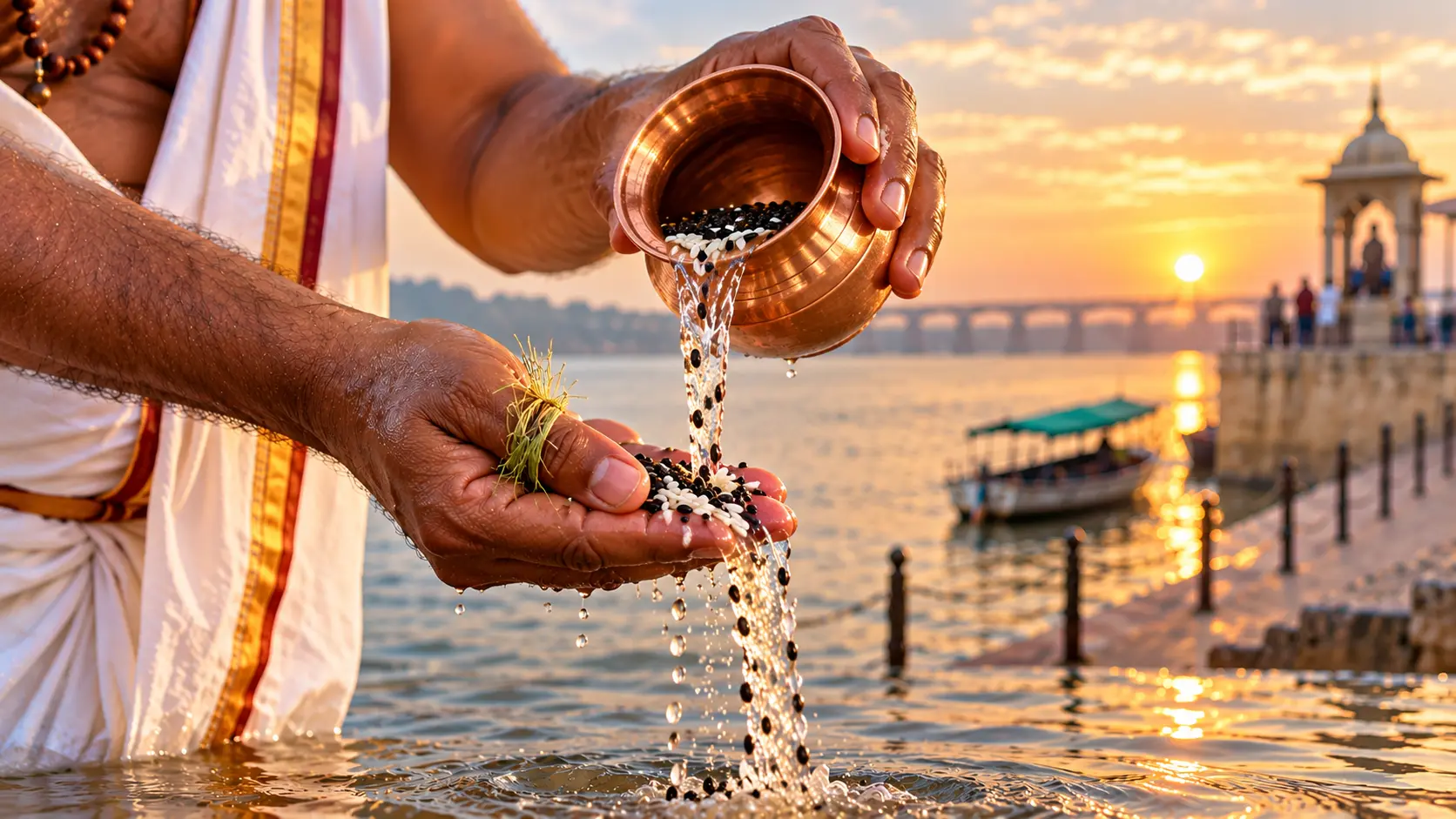
Priest performing Tarpanam with rice, black sesame seeds, and water at the Godavari river

Key Info

Best Ghat
Gowthami Ghat
Best Time
5:00 AM – 9:00 AM
Priest Dakshina
₹500 – ₹1,000
Kit Cost
₹100 – ₹300
Duration
15–30 Minutes
Do it yourself?
Allowed
❁ ❁ ❁
Preparation

What you need to bring

You can buy a ready-made kit at the ghat for ₹100 to ₹300. However, if you want to prepare it yourself according to your family tradition, bring these items:

  • Rice: One handful per ancestor. About 250g is sufficient.
  • Black Sesame Seeds (Nuvvulu): 100g. This is the most important ingredient.
  • Darbha Grass: A small bundle. Used to make a ring and as an offering platform.
  • A small copper vessel (Lota): For the water.
  • Black cloth: Traditionally worn by the eldest son performing the ritual.
The Ritual

Step-by-Step Procedure

If you are performing this without a priest, follow this standard procedure. (If you hire a priest, he will guide you through the Sanskrit mantras).

The 5 Steps

1. Face East
Sit on the riverbank facing the water. Do not sit directly in the water. Sit on a flat stone or a mat.
2. Invoke
State your name, your gotra (family lineage), and the names of the ancestors you are invoking. Say: "I am performing this Tarpanam for [Name]."
3. Mix
Take water in your right hand, add a pinch of black sesame and a few grains of rice.
4. Offer
Let the mixture flow back into the river while repeating the name of the ancestor. Repeat this three times for each ancestor.
5. Conclude
Offer a final handful of water with both hands. Bow. If a priest helped you, pay the dakshina now.
Advertisement — Puja Samagri Delivered
Common questions

Tarpanam FAQs

Can women perform Tarpanam?
Yes. Traditionally, the eldest son performed it. However, in modern practice, women also perform Tarpanam for their parents and ancestors. Some orthodox families still follow older restrictions, but at Pushkaralu, women are doing it freely.
Do I need to fast before doing this?
It is not strictly required, but many pilgrims eat only a light meal (or fast completely) before the morning ritual.
Should I perform Tarpanam on a specific day?
Amavasya (July 3, 2027) is the most powerful day for ancestral rites. However, it will also be the most crowded. Any of the twelve days is considered acceptable.